

A few weeks ago, I found myself in an all-too-familiar position - thumb hovering precariously over the ‘Buy now’ button on Vinted, hypnotized by the siren call of the item on my screen.
It was a pair of designer shoes I’d been searching for for months - in good condition, my size, at a reasonable price. And yet, I couldn’t bring myself to press go. The reason was the very thing that had attracted me to them in the first place - a simple logo, emblazoned on the toe.
I used to like the flash of a logo - in my early 20s I’d wear a pair of Gucci horsebit loafers* with my dishevelled thrift shop outfits, enjoying the irony of ripped tees and boudoir shorts with a fancy pair of shoes. I also used to carry a Chanel book bag I got at the Paris Salzburg show. In general, a bit of designer bling is a great way to pull together an otherwise grungy or casual look. It’s like tightening a drawstring on your outfit - or quietly saying ‘listen, I know what I’m doing here’.
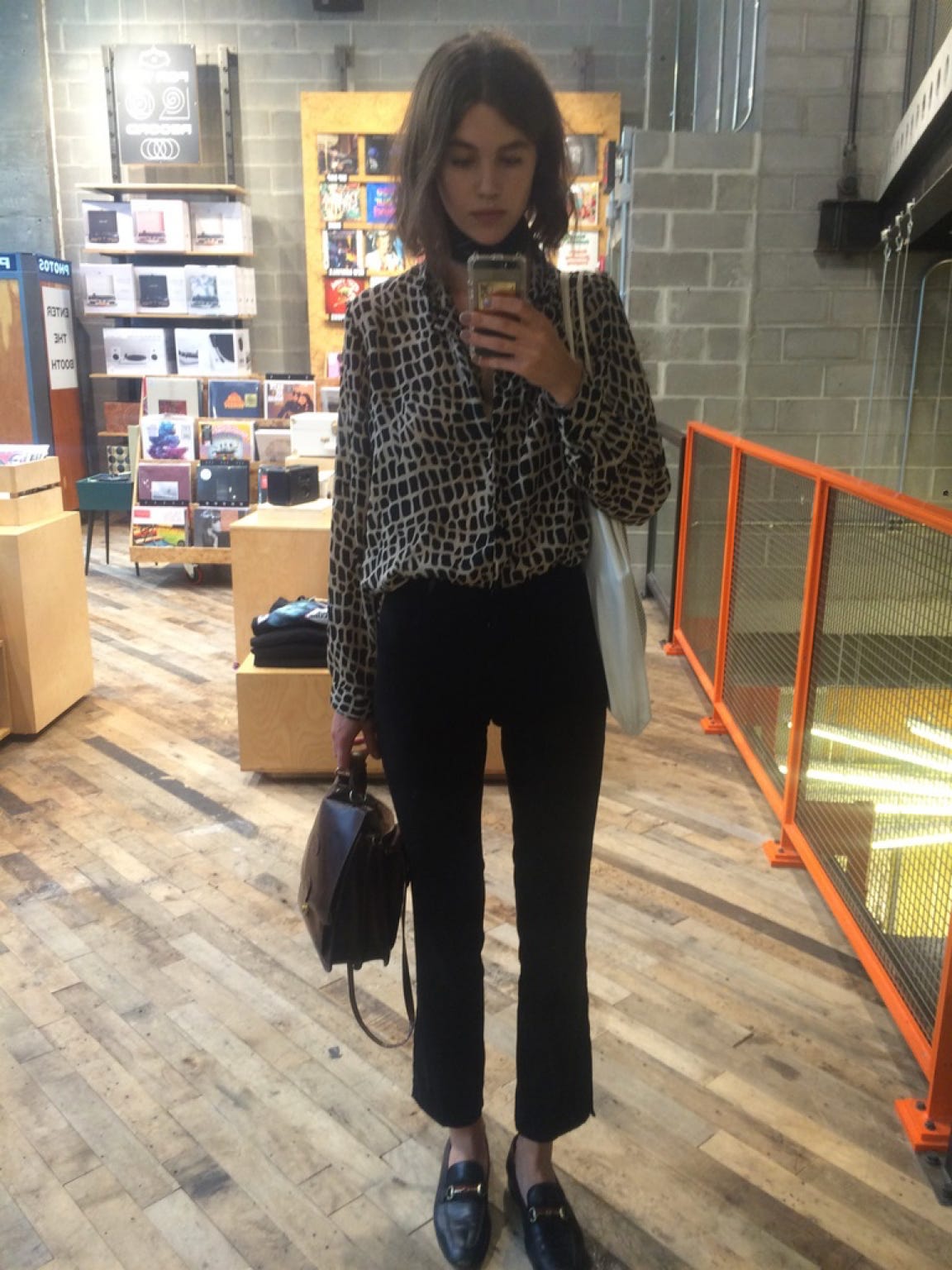
But recently, my feelings have changed. I’ve developed an allergy to logos and signifiers - even the most subtle or elegant kind. A gold foil brand name on a bag makes me drop it like a hot potato, same with an embossed sunglasses arm. This change of heart goes deeper than just aesthetics. It comes from a sense of disappointment (betrayal, even**) by Fashion with a capital F.
Where luxury fashion is concerned, there used to be an invisible contract between buyer and brand. You as the buyer would pay a premium price for the goods, and in return you’d get something that adhered to the below criteria:
a. It was beautifully made, and would last for a long time
b. The item would also retain its luxury status - meaning it would remain legible as a beautiful, tasteful piece that you’d be proud to wear for years to come
c. You would own something special that not many people had
These days, that contract has been broken. We can no longer rely on luxury brands to deliver us the same quality of craftsmanship as before. And the cycle of trends, combined with flicking designers around like Subbuteo players, means that the signals get scrambled every six months.
Heidi Klum was right when she prophesied: “One day you’re in, the next day you’re out”, only those days are now ever closer together. The consolidation of the industry and the whirring social media mill has created a hypercycle of obsolescence, whereby a must-have piece will suddenly transform into a cheugy relic just a few months later. Your new designer purchase is a ticking time bomb, ready to combust into a meme at any moment.
This is one reason why wearing archival pieces is so popular right now. It’s easier and safer to take ownership of the distant past, rather than risk getting stuck in that liminal space between what was cool then (5 minutes ago) and what is cool now (5 minutes later).
There’s also the question of price. Luxury was never meant to be affordable, and yet there was a sense that at a certain point in your life, when one’s earnings and corresponding lifestyle creep reach a certain level, that perhaps you might be poised to invest in something special, for reasons a., b. and c. above.
I’d say I’ve reached that place in my life - I’m over 30, no longer cycling through different versions of myself, and I want to look sharp and presentable for both professional and personal occasions (disintegrating vintage is harder to get away with post 30). I also have a bit more disposable income to fund this pursuit, plus I work in fashion, so there’s an expectation that I should dress accordingly.
And yet, designer clothing has never felt further out of reach. Luxury goods now cost on average 1.5-1.7x more than they did in 2019. Last weekend, I went to a department store to buy an outfit for an upcoming wedding. I found a gorgeous look I loved - but it came to over £1200, not including jacket, shoes or bag.
Sure, I could just shop within my price range. But I know too much to be satisfied (ethically, aesthetically, intellectually) by high street alternatives. When I talk to my peers, many feel the same frustration. We’re primed to be enthusiastic mid-range consumers, but despite maturing obediently into this demographic, have been left high and dry.
Even on the few occasions I do consider buying into a designer brand, I feel turned off by their audacity. On that same shopping trip, I picked up a pair of designer sneakers, and counted four logos on one shoe - tongue, heel, side, sole. That’s eight in a pair. It’s too much! In an age where every surface of our existence is advertising, the last thing I want is for my body to become a billboard as well.
Another solution is to buy things on sale, or at outlets - but when 30-40% of luxury goods were sold at markdown last year, it makes one even more aware of being duped. Overproduction and excess availability are the opposite of special and unique.
Recently, fashion pundits have been skeptical about the Zara x Galliano announcement (the next in a line of legacy fashion partnerships that see the retailer pushing upmarket, away from the Sheins of the world). Regardless of my feelings around the collaboration***, its reason for being is a direct result of the disintegrating relationship between high fashion and its authentic community. And if the likes of John Galliano, Steven Meisel and Stefano Pilati (who spent 12 years as creative director of Saint Laurent) are willing to work for a high street brand, it hints that perhaps the creatives are dissatisfied with the current model, too. Sure, some just follow the money - but there’s probably also the appeal of young, excited fashion enthusiasts wearing their designs.
Despite my ranting and raving, I want to stipulate that this isn’t a sweeping annihilation of luxury brands as a whole. It’s not the individual designers or labels I feel resistance towards, but rather the system we’ve created to contain (and expand) them. As an avid consumer of secondhand fashion, these names still mean a lot to me - vintage Prada makes me sweat just as much as the next shopper. When I look at runway shows, I’m still taken by the ideas and creativity at their core.
In my mind, there’s an increasing bifurcation of this kind of excitement, and the machinations behind Luxury FashionTM. The latter is obfuscating the former, and making it much less fun. I suppose the fear is that we sell off all the most valuable parts of these brands to the highest bidders (wealthy VICs, rich tourists, billionaire businessmen), leaving the industry with a hole where its soul used to be. And fashion without true emotion is meaningless.
In the meantime, the brands I find myself gravitating towards are those that feel small, quiet, focused. Beautiful quality, exceptional design - but above all, they transmit a feeling of respect for their customer. And most importantly (for me), no logos in sight.**** Because if and when I shell out for expensive clothes, I want to feel like the person behind them considers me an intellectual equal - not a data point, or a sheep to be branded.
*vintage, but purchased early Alessandro era
**aware that I sound a bit like Neelam Ahooja’s viral letter to The Row here
***I understand the ethical implications, but also don’t see how it’s so different to designers partnering with H&M on various collaborations over the years. The responses feel like a double standard, and I wonder if it also has something to do with the industry’s complicated relationship with Galliano the man.
**** brands that make me feel this way include Johanna Parv, Veilance, Nadine Mos, Phoebe Philo. I also admire designers like Marie Lueder, who are creating their own self-referential world, with their audience at the heart of it.
Don’t forget to catch up on the Threads of Conversation podcast - previous guests include Lyas, Brenda Hashtag, Alexander Fury and Jessica Willis.
You can also find the podcast on YouTube, Spotify and Apple Podcasts and follow along on Instagram and TikTok. Subscribe below for more episodes, essays and interviews.
What do you think? Have luxury logos got out of hand? Or am I just a pretentious fashionista whining because brands don’t love me back? Would love to hear your thoughts!
Agree and that’s why I’m trying to rent for special occasions (although the price points are pretty eye watering that way too!) And I think rental brands marketing themselves as the sustainable saviours of fashion but pushing immediate delivery on a Deliveroo bike is ethically dubious.
Hard agree.