
A Thread about the party that birthed London's best fashion talent
Photographer Liz Johnson Artur discusses 'PDA', her new book documenting the legendary London club night

When I interview guests for the podcast, there’s one name that keeps coming up. It’s not even a name, really. The acronym PDA is rumoured to stand for Public Display of Affection, Please Don’t Ask, Panic Disco Arena, or even Pretty Dick Available.
Whatever its true meaning, PDA is a London nightlife legend, a Black, Brown and Queer party that ran from 2011 to 2021 and nurtured creative talents including designer Maximilian Davis, creative director of Ferragamo, director (and PDA co-founder) Akinola Davies Jr, who won Outstanding British Debut at the BAFTAs last night, Ib Kamara, Creative Director at Off-White, and Shygirl, whose video for ‘BEAUTS’ is a compilation of the stairwell cam that defined the PDA era.
In the party’s later years, one photographer was also there to capture it. Liz Johnson Artur is a legend in her own right, known for her documentation of subcultures and the Black diaspora, which she began in the early 1990s. She’s also no stranger to the fashion industry, having shot covers for Dazed, i-D and Garage Magazine (the latter being one of my favourites - Michaela Coel with her face painted in gold leaf). When I heard she was releasing a book about PDA, I asked if she would be open to talking about it.
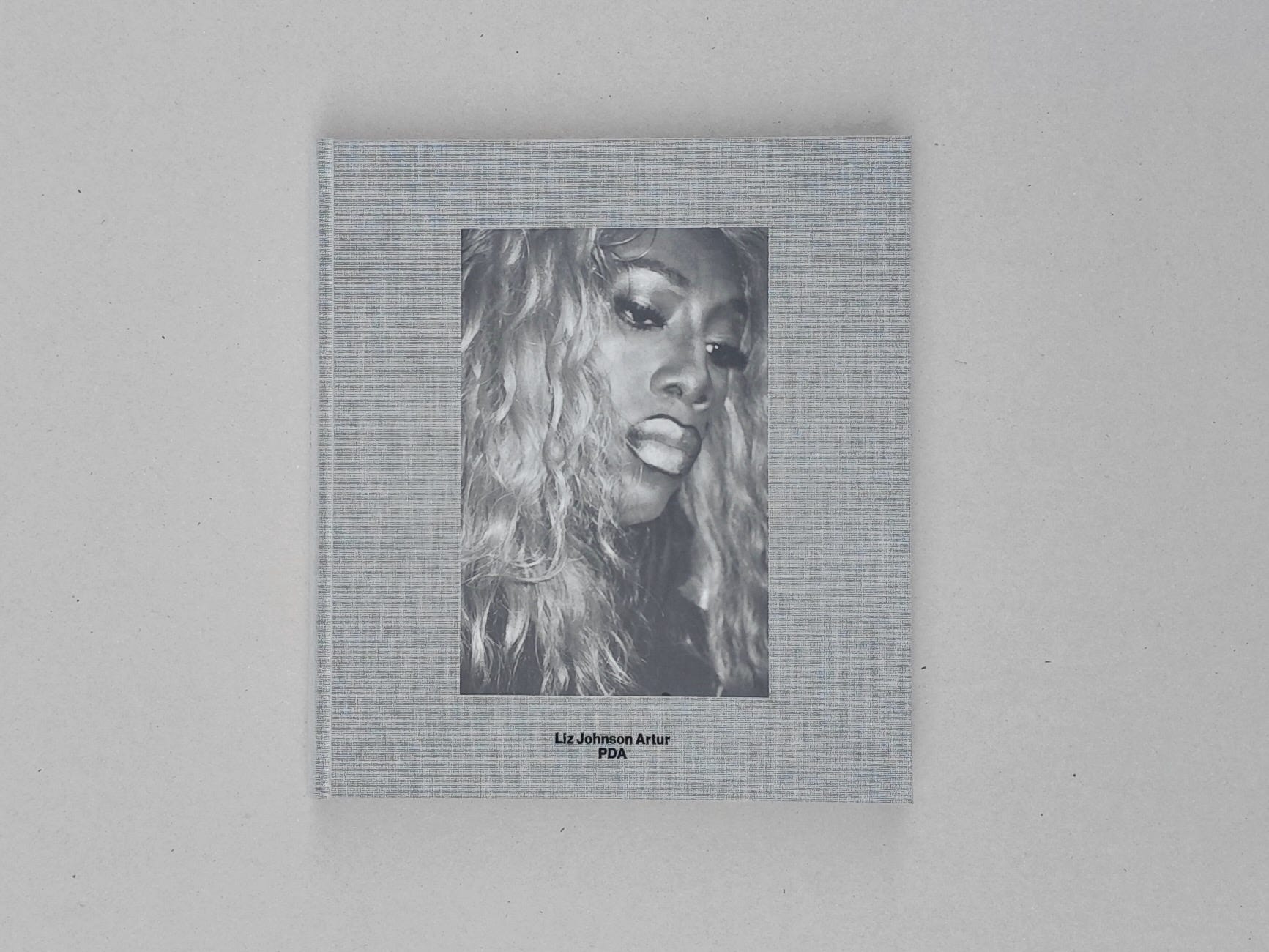
At a time where nightlife spaces are closing at alarming rates, and younger generations seem more interested in looksmaxxing than funmaxxing, this book represents exactly what makes independent club culture so important. Parties like PDA provide a safe space to experiment with style and identity; to let loose and become who you really are. They’re also an incubator for genuine community - the relationships that sustain the creative industries with fresh ideas, diverse perspectives and ongoing support.
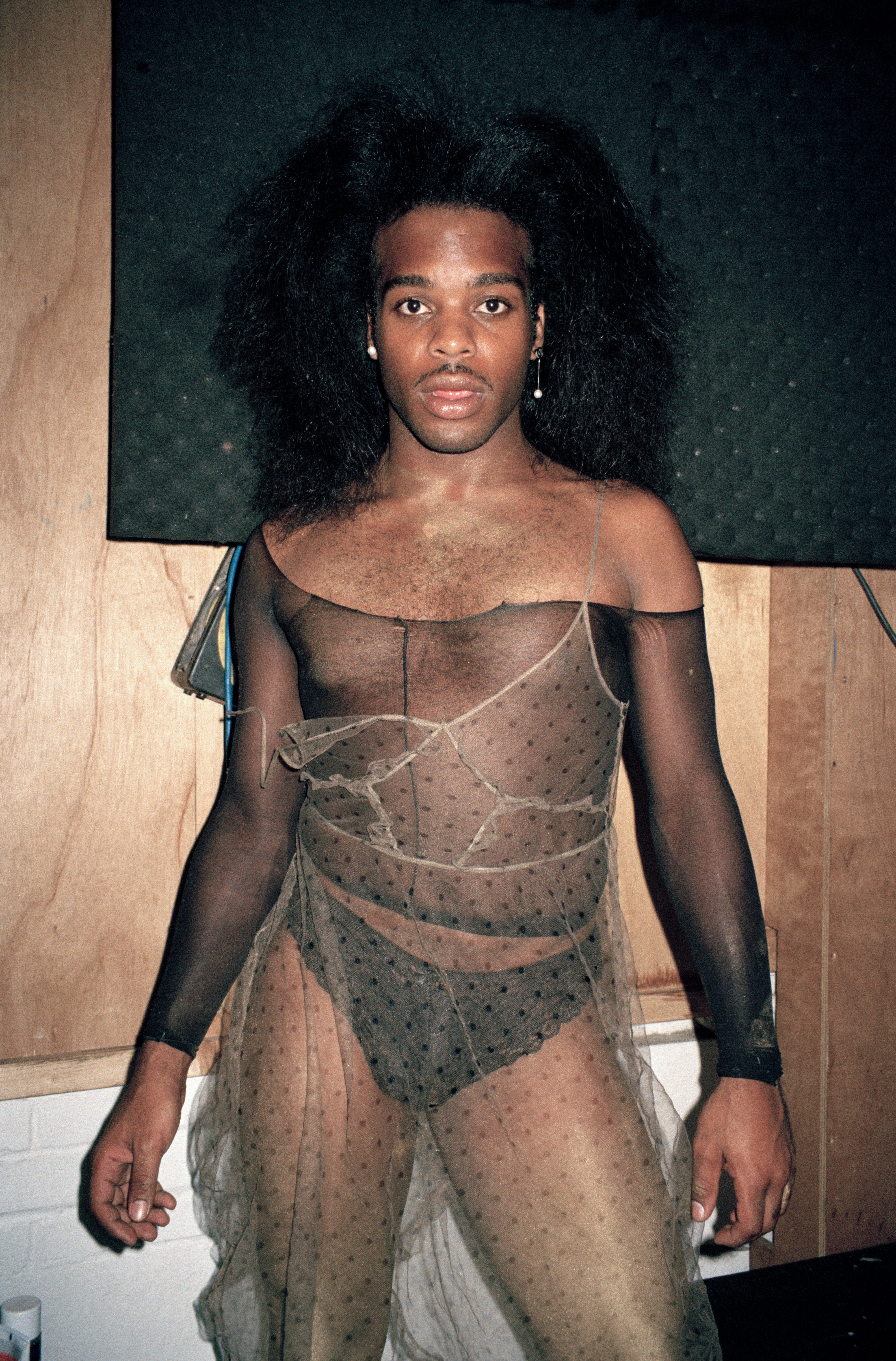
The book primarily documents the partygoers, always dressed in fabulous outfits (the stripes of Asai’s famous Hot Wok top can be spotted on a few occasions). But there are quieter moments, too, chronicling Johnson Artur’s friendship with many of the PDA collective, particularly founder and DJ Ms Carrie Stacks, who appears on the cover.
In this conversation, we discuss the making of the book, and how it represents just one perspective on PDA - a party whose influence still reverberates in the creative industries today.
Georgia: What was your first experience of going to PDA? What were your first impressions?
Liz: Someone I met in Berlin invited me to a gig, and I just went along. And one of the things that happened there was that Carrie just walked towards me. That was my first flash of seeing Carrie.
That evening I started taking pictures and then they told me about PDA and I was like, “Okay, I need to go.” I have to also make the point that I’m a different generation to most people that go to PDA. For me, my clubbing days were in the 90s.
Mischa [Notcutt], who was one of the main figures, she didn’t allow people to take pictures. So I went to Mischa’s place and we met and she said I could take pictures. One of the first images in the book is from that first night at PDA. What can I say? I went in and I loved it. I think what I loved was the way it was a warm place. People were welcomed; they treated each other as equals.
Around about how many pictures would you take each time you went?
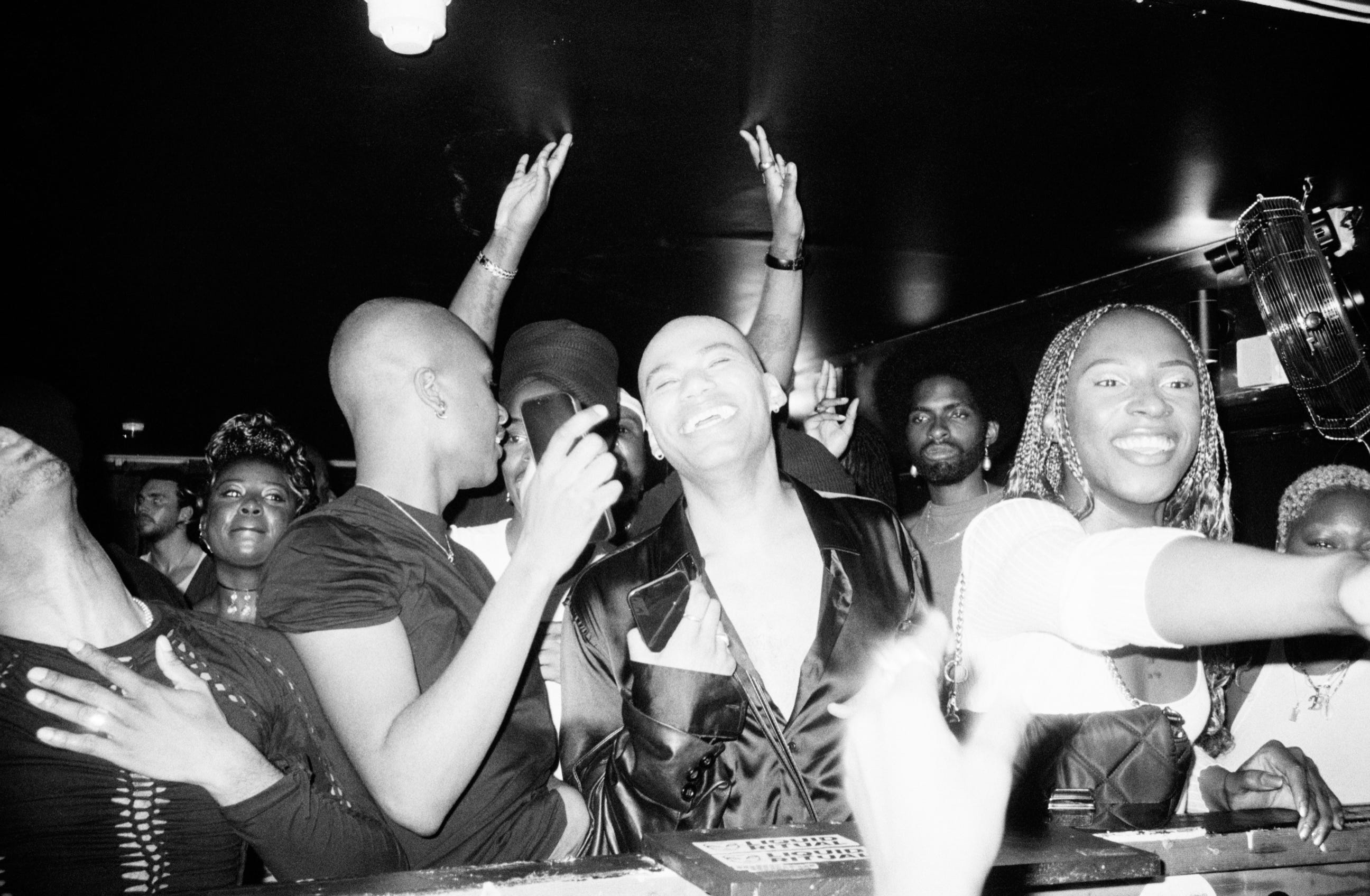
You can’t do that by numbers. The way I take pictures is that I take a certain amount of film with me that has to last me for the night. Sometimes I would take three rolls, sometimes I would take five rolls. I would never come back with a roll not shot. But I think I paced myself. It didn’t feel like I had to catch everything right here, right now. I just went with the flow - you can see it in the book.
Usually when I work, I print the pictures that I’m interested in, and so the PDA book kind of grew in the time that I was shooting. So every time I would go and process some film I would print it and put it in a book. And it became a very big book over the years.
The PDA bible?
Exactly, the PDA bible. That’s what I wanted - the bible standard. What I took was something that was my perspective. I think PDA has so many other levels. As I said, I’m probably not a typical PDA goer. But I became close to them and I think that’s what the pictures represent.
When you talk about shooting people you describe it as more like a collaboration with the person. How do you go about building relationships with your subjects?
I think it’s a matter of communicating what I want or what I do, and seeing if they allow me to take a moment and take a picture. These moments are not always a verbal communication. A lot of times they’re just glances, just being present so people see what I do. I don’t shoot on a phone, and I have cameras that are actually quite slow. So it takes time for me to take a picture. And I think with PDA, it was a matter of people really accepting me.
I think what is important is to say that I don’t give directions. I receive what people give me and my job is to make sure that moment is there in good quality. I think what people give me is something that they feel comfortable doing.
When you were getting the film developed did you show your subjects the photos?
This is an interesting question because I don’t really. Sometimes I do - when I was making the PDA bible and people were here [in my home] sometimes I would show them what I had. But it wasn’t a thing where I would take someone’s picture and they were like, “I want to see it.” It’s the enjoyment of that moment, of capturing it, that I really like. And I guess because I work on film and you can’t see directly what it is, you have to work with trust. And the trust was that people kept allowing me to take pictures.
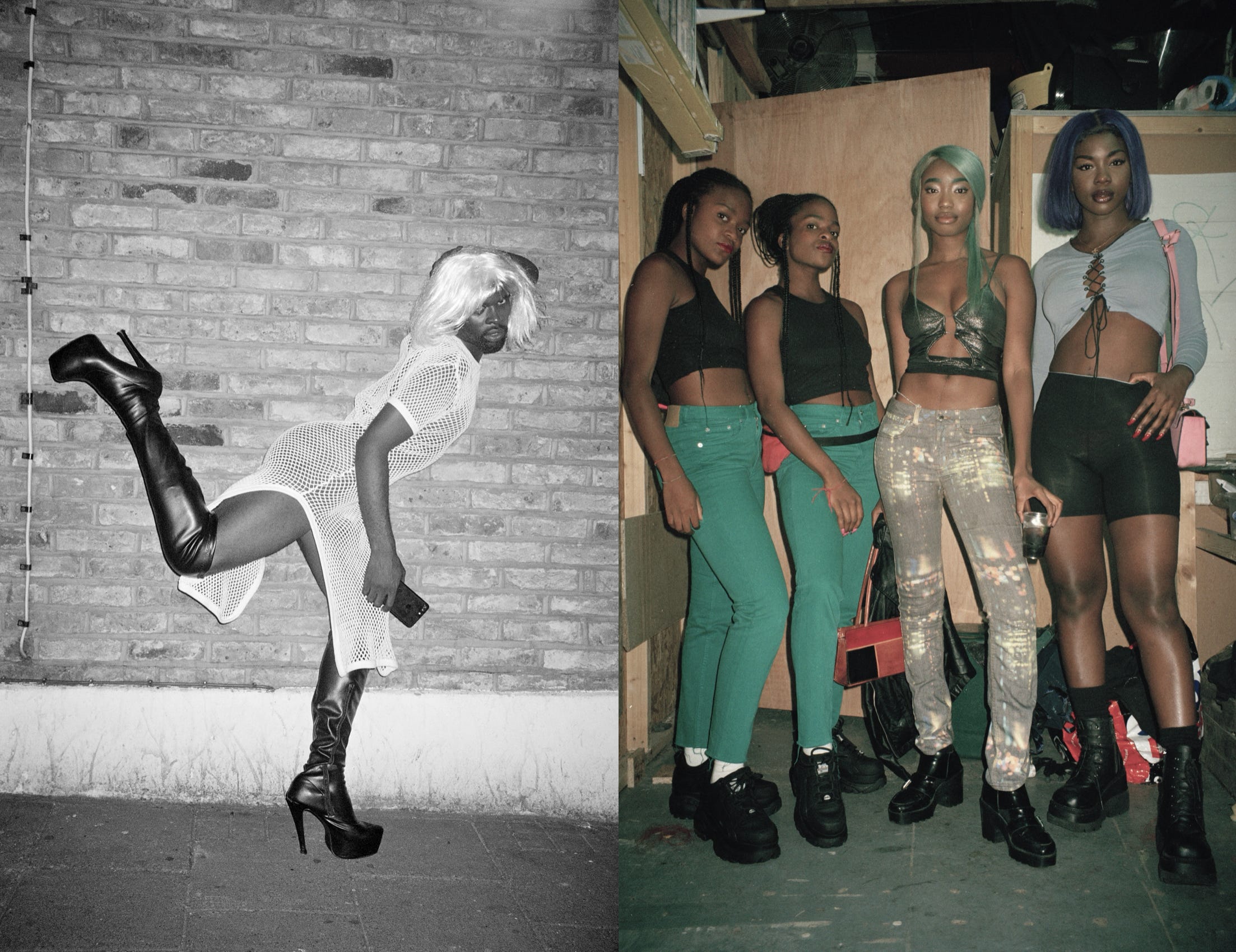
It’s to the credit of how PDA was - very inclusive, but also very protective. And I think the way Mischa, Akinola, everyone who was involved in it, they created an atmosphere where people felt free to be who they wanted to be. And I think my pictures got a little bit of that.
I always wonder if you felt in competition with the stairwell photos? I feel like there are two visual histories, yours and the stairwell.
This is why I’m saying that the book represents my perspective, which is how I moved about, how I approached people, who I chose. The stairwell is very much PDA. That’s being at PDA, that’s the people who make PDA. And I think there are many ways of telling the PDA story. But I think if you want to get to the core, then it’s the staircase.
It’s almost like PDA is this essence and there are these fragments of capturing it. Some of it is like verbal lore, then we have your book…
PDA accumulated a lot of what London, in terms of talent, represents. And I think it’s something where they will probably tell their own story, because they also documented the story of PDA in their own way.
It’s also important to see that these things are so multifaceted. The people who run the place are the people who have the real story. What I have is a glance into it and being allowed in. So it’s a privilege.
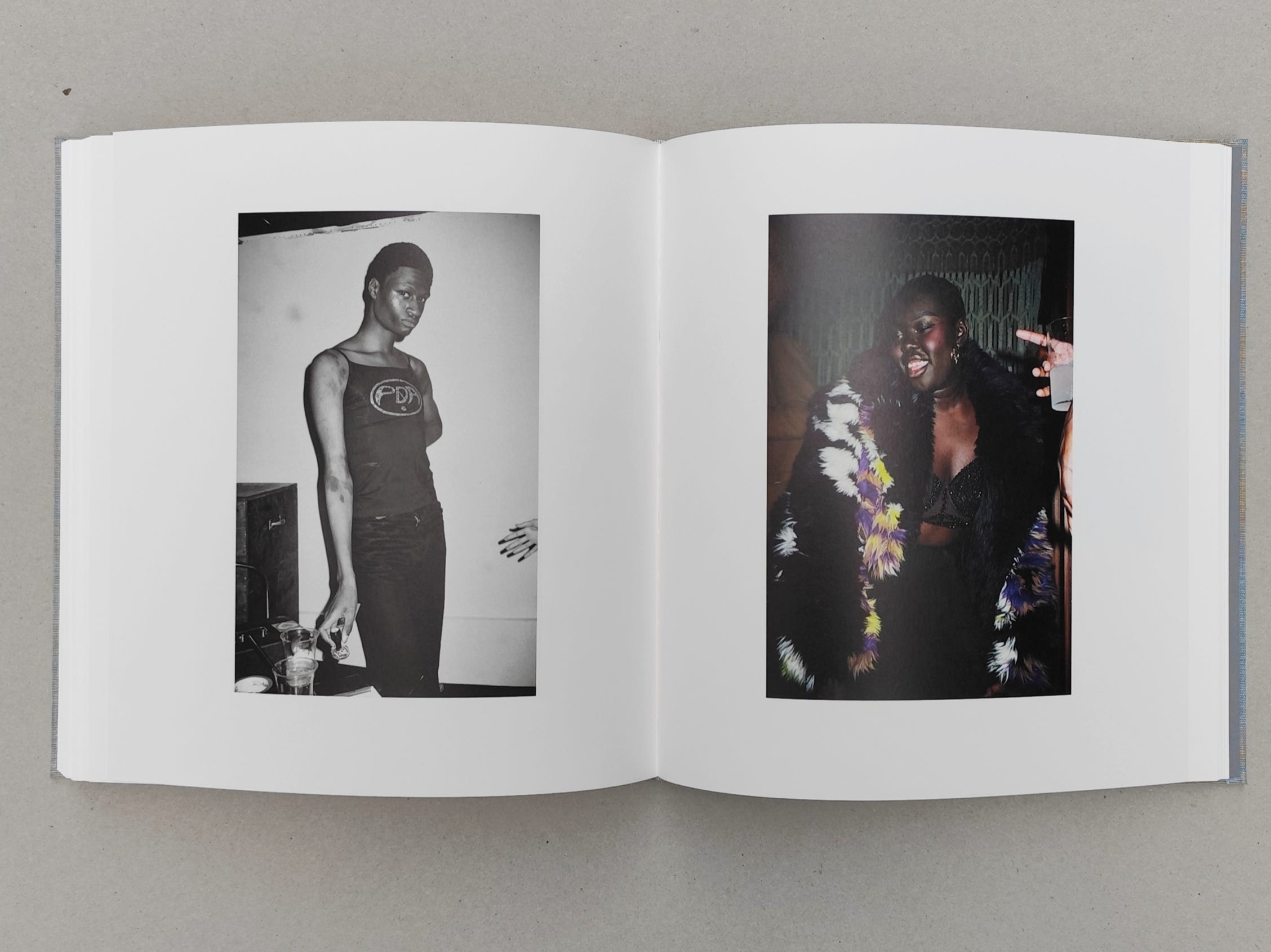
I want to talk about the book itself, as a physical object. Why did it feel like the right time to release it?
Sometimes the right moment is just there and you don’t actually know why. Usually when I make books, I’m very… I wouldn’t call it a control freak, but I’m used to doing the books that I want to have. With PDA, it was also very important that people like Carrie, Mischa - that they were also involved in choosing what pictures went into it.
I also wanted their involvement because as much as PDA is wonderful, PDA is also a very fragile place. When you step out, the world outside is very different. The people who gave me their picture in PDA might have a much harder time once they’re outside PDA. So there’s a certain kind of responsibility about how and who to show. That needs the involvement of everyone - I couldn’t have done that just by myself.
That was something I was thinking about, how PDA has this real legacy of privacy. It’s this place where people are very expressive and flamboyant, but nonetheless, it is a closed thing. Was it nerve wracking at all being like, “We’re going to show this.” Not necessarily being able to control the audience once the book is out there.
Of course, yes. And I think we went through certain stages. Because as I said, PDA, it’s not me, it’s the people who run it and the people who went there. And they’re the ones who are exposed. In the moment, people gave me their picture, but it might be a thing where for this picture to come out, it might be an issue.
PDA is very protective. That’s something that I had to respect. I was allowed into a space where people felt free to be who they are, but it doesn’t mean that you can do it 24 hours a day outside of PDA.
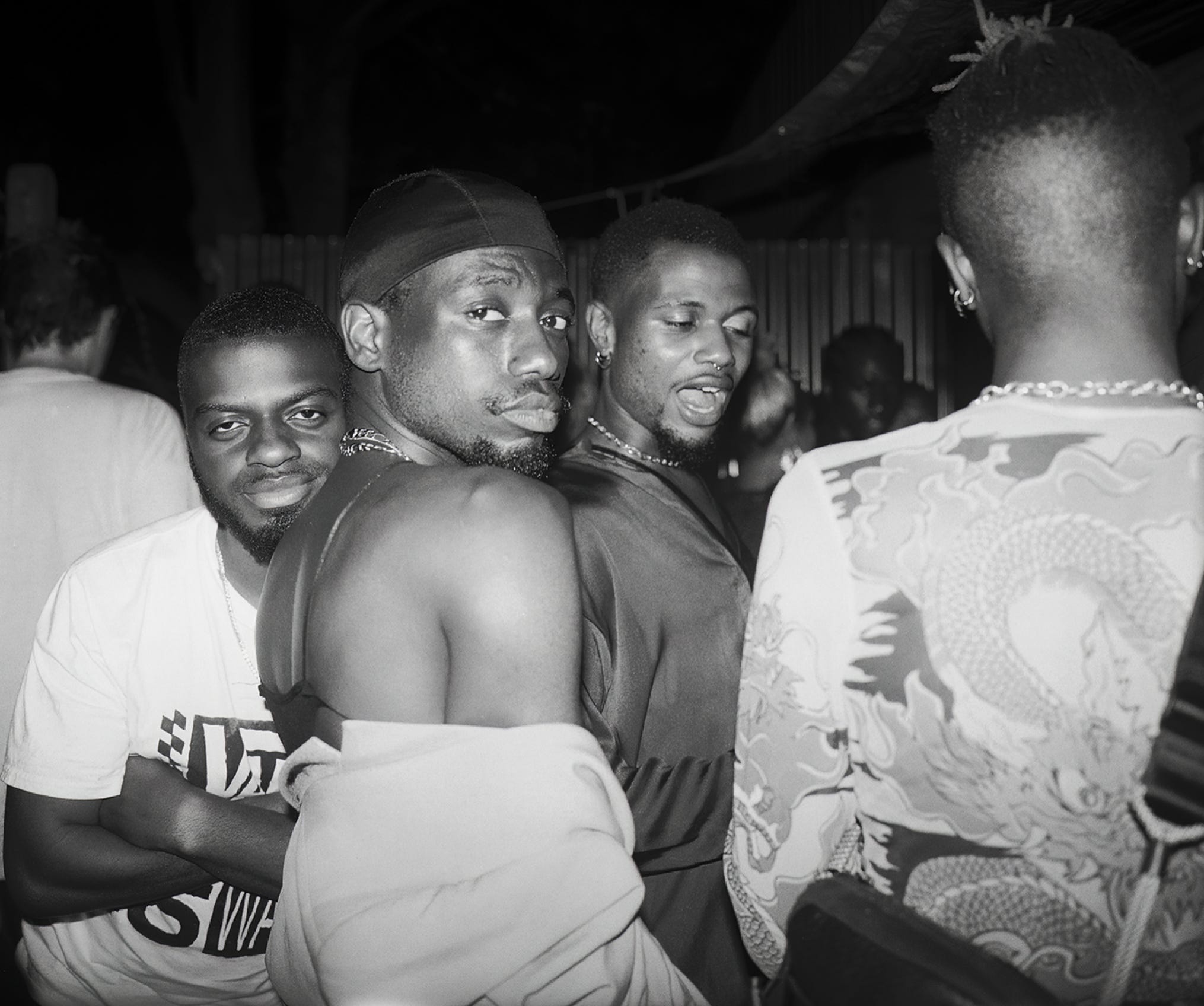
And how did you choose the cover photo? I feel like that’s a million dollar question for a book.
It’s the cover that I chose for the Bible.
[at this point, Liz retrieves the original ‘PDA Bible’ from her shelves - like a huge scrapbook bursting with images]
So this is the PDA Bible. It’s very thick.
Oh, wow. It’s massive.
It’s massive. And it chronicles everything from when I started. And I think I just chose this picture because Carrie was one of the people that I got very close to. From my perspective she is in the book all throughout because for me she represents something very essential. Without putting it into words, I think it’s actually quite evident once you go through the book. And I wanted something that is… close. Rather than being flamboyant, being close.
It captures the glamour, but also there’s a pensive nature to it as well. Most of the book is photos at the party, so in the club or just outside. But then there are a few ‘getting ready’ pictures, and that really beautiful sequence of Carrie having a cigarette on the balcony. I think about the Leigh Bowery exhibition I went to recently, how so much of the night is getting ready for the night. Was that something you thought about?
I think for me, there was PDA where it was this space that suddenly opened up and people came in. And equally, in terms of my involvement with PDA, I got close to some people. Carrie was staying with me, we’d make food. And those moments for me were also part of PDA.
Those pictures are very important for me, because I don’t look at the PDA book as a club book. This was the place where I could do the portraits that I wanted to do, so I used that as a backdrop. But my approach was probably more of a portrait photographer. And I think the moments when it wasn’t PDA, it was still very much about the people who made PDA. All these moments are important because I perceive PDA as a warm place. It wasn’t just a club night.
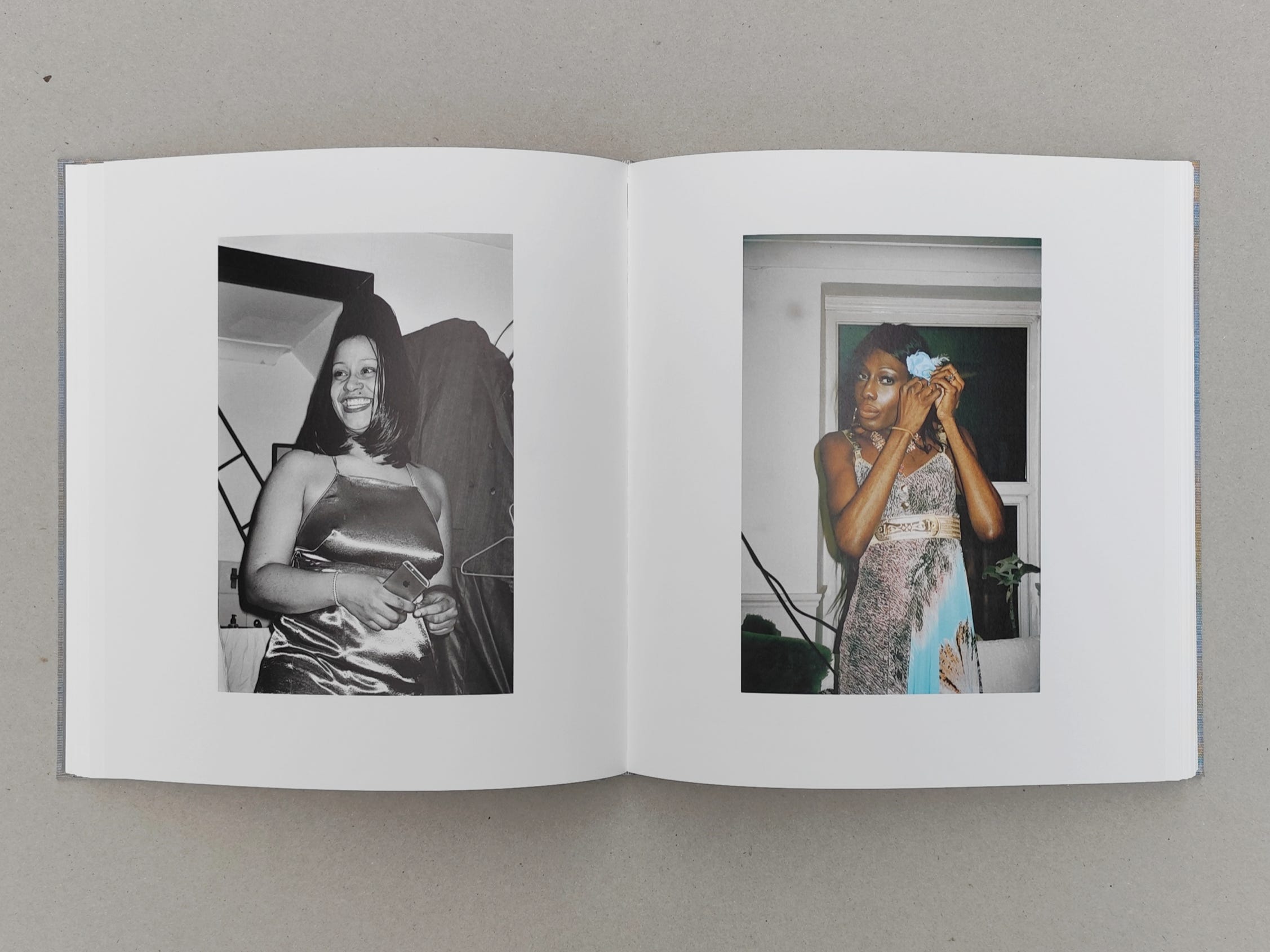
That’s such a lovely expression, a warm place. Although I’m sure it was boiling hot at times!
Listen, the hardest thing was to keep my lens not fogged because it was sweaty!
There are moments in the book when Carrie reappears, and it’s almost like this breath, or a moment to think, and then you’re back in the party.
I guess that’s a good way to see it. You go in and it’s very intense, it’s sweaty. And then there are these moments when you’re not there. And I guess because Carrie and I spent quite a lot of time outside PDA. That gave me these moments where I could capture her in a way that tell you a little bit more about her.
As much as I love style, what I try to bring out is the human being. And I think it’s moments like this that get you a little bit closer. I’m also very grateful to her that she allowed me so close.
Would you call your relationship kind of artist and muse? Or do you think that’s totally cheesy?
I think the idea of a muse is a little bit dehumanizing. I prefer to think of a closeness, a human exchange. Rather than the artist who uses a muse - because a muse is a human being.
Perhaps that’s why we often associate the expression with a man and a younger woman.
It is kind of like the chosen one and the one who tells the story. I like to think that what I do requires a certain kind of eye level. It requires that you actually see the person on the same level. That you don’t look down on people, that you don’t look up to them. But you see them on a level where you can exchange what you want to exchange.
Would you say that your pictures get better, the better you know someone?
It’s an interesting one because my work is very much about - I wouldn’t say people that I don’t know - but people that I want to know. If I look at the whole of my work, a lot of times I look for people in places that are public, in places that are actually accessible to others as well. And that’s where I look for these sort of private moments, because it’s those spaces that we all share, that we need to remind ourselves that we are on eye level.
I’m not interested in exposing someone’s privacy, I’m interested in showing someone’s humanity. And I think that’s something we carry outside. We always have it with us, and it’s a question of respecting that and preserving it.
It’s something that I had to also learn to overcome in terms of guilt, taking someone’s picture. I can say for myself, I don’t like being photographed by anyone. I’m very protective of myself. And I guess that’s why I appreciate it when people let me in.
Buy the PDA from Climax Books, Tender Books, Studio Nocturne, or your favourite independent bookseller.
Don’t forget to catch up on the Threads of Conversation podcast - this week’s guest was TikTok star and stylist Chani Ra, aka. The Fashion Nap, who rose to viral fame making videos during her newborn’s nap time. We discuss going viral on TikTok, building a career on social media, and how she balances content creation with her most important job: motherhood.
You can also find the podcast on Apple, Spotify, and YouTube, and follow Threads of Conversation on Instagram and TikTok. Subscribe below for more podcasts, essays and interviews.