

I know we’re well into London Fashion Week, but it took me a few days to digest New York’s shows. Here are some thoughts - let me know yours in the comments.
Perhaps it’s the global mood right now, but New York fashion week felt more emotional this season. There was a sense of wistfulness - the question of fashion’s future casting a long shadow over proceedings. This feeling brought the week’s dominant theme into sharper focus. This theme, to me, felt like growing up.
One of the questions that fashion seems to be asking itself lately is how to age in this industry. These days, younger brands are at risk of a short shelf life, if they even make it onto the shelves at all. With so many retailers struggling right now, the pathway to purchase is heavily potholed. And without cash, it’s impossible for designers to survive. After all, a necessary part of growing up is seeking safety; finding the stability to support a long and healthy adult life.
To survive, you need to protect yourself, and this idea featured in a number of designers’ shows. Willy Chavarria began the week with a collection titled ‘Safe From Harm’, which opened with a film showing a group of models living together in a collective. In some scenes, the characters assist one another whilst lifting weights. At the end, they gather in church. The message was clear: your community will keep you safe. Perseverance will make you strong. Still, as models assembled at the end of the runway in a last supper-style formation, it felt like Chavarria was nodding to the precarity of being a designer today. Every show could be the last supper.
Collina Strada also explored the idea of strength in her collection, ‘Stronger’. The show notes began with the line “Welcome to Collina’s Gym” and models (some of whom were bodybuilders) wore sculpted six pack tops and carried dumbbells made from vegetables. Her cast was notably lacking any cis men - a conscious decision, designer Hillary Taymour told Vogue.
This made me think of the recent reports about how men and women are becoming increasingly polarised politically, with men leaning towards traditional values whilst women skew progressive. As a result, birth rates are expected to fall. It’s also been nearly 2 years since Roe vs. Wade was overturned, but the topic remains an open wound. I felt its presence in this show, which featured one pregnant model, and another holding her child.
As always, Strada’s collection also addressed sustainability. How can we protect the planet and future generations with our insatiable hunger for new clothes?
Another designer who spoke to this idea of protection was Peter Do at Helmut Lang. Last season models wore seatbelts, this season he wrapped them in bubble wrap. Perhaps he was also protecting himself from the critics, who responded negatively to his first collection for the brand (I found Alec Leach’s analysis kinder and more compelling than many of those reviews).
Within the context of fashion, the notion of safety also applies to surviving the industry itself. Hardly surprising then, that we saw designers doubling down on making clothes that sell. New York is often criticised for being the most commercial of the Big Four, but this season it felt like a smart and necessary approach. Whilst quiet luxury was yesteryear’s Succession-induced fad, this season the trend was metabolised into clothes that were durable, wearable and cool.
Khaite nailed this brief as always, showing a collection that was all about outerwear. Models emerged from inky black darkness wearing thick fur jackets, oversized leather bikers and dark glasses. I read that designer Cate Holstein had recently lost her mother, and Holstein’s tribute to her was woven into this collection. I remember my own mother telling me when her father died that losing a parent is the moment you truly grow up. The sobriety of this collection implied this is true.
Proenza Schouler showed a strong collection, cementing their place as New York fashion’s prodigal son. Designers Jack McCollough and Lazaro Hernandez have been on quite a journey, from their initial heyday in back in the early 00s, to losing control of their brand after growing too quickly, and thus losing a lot of their core audience. This is a great explainer by Lauren Sherman, (who’s also a Threads of Conversation podcast alum.) Since buying back their name, Proenza has been following a safer, steadier commercial trajectory. They’re appealing to people who knew and loved them back then, whilst also making a play for a new audience who appreciate cool, well-cut clothes. From a strategy perspective, they set themselves up well this season, building hype with that buzzy no-makeup Pamela Anderson campaign in January, and also dropping a new logo, which I’m sure we’ll see developed into many commercial hero products.
Even the more experimental brands such as Eckhaus Latta seemed to be keeping their heads down and doing what they do best, delivering a refined edit of pieces that are sure to please their core customer. Whilst true to her coquette roots, Sandy Liang’s collection was praised for its maturity. She might still wear ribbons, but she’s thinking seriously about her future these days. At Batsheva, the designer addressed the notion of ageing head on - casting only models over the age of 40 for her show. One even wore a sweater bearing the word ‘Hag’.
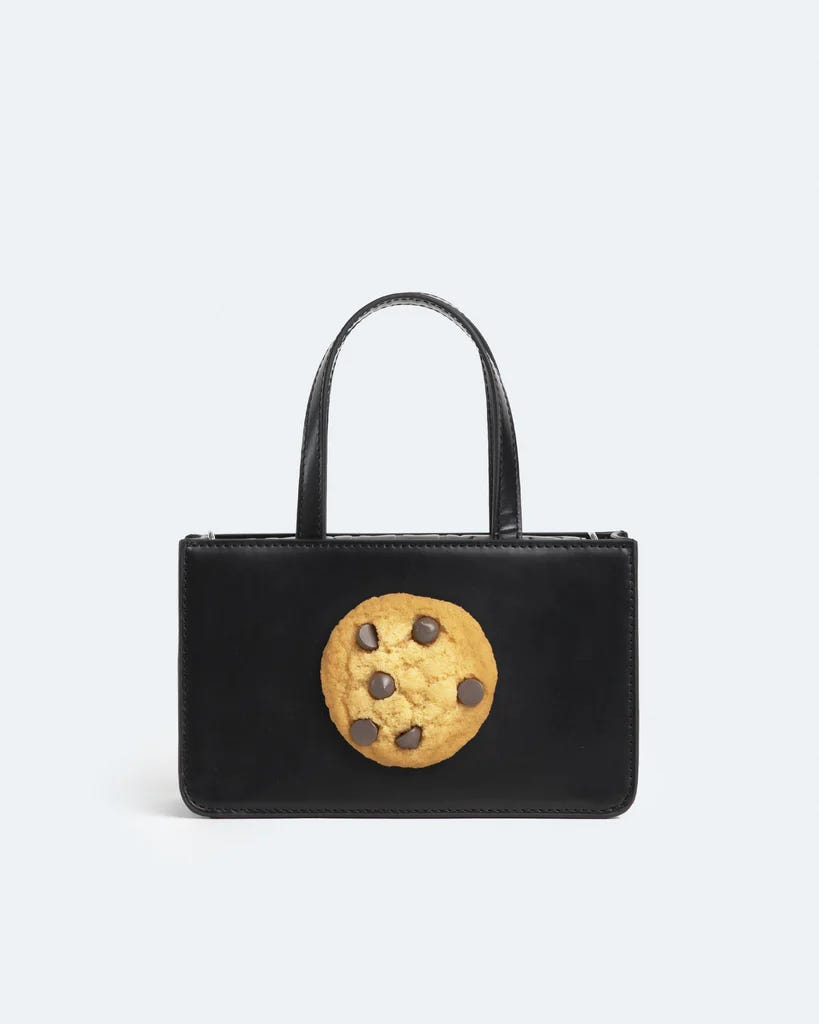
Of course, celebrities are also a vehicle for commercial success. Luar scored highest at fashion week when Beyonce turned up at the show carrying a large Ana bag - the brand’s signature. Accessories are a key sales driver, and creating an it-bag can secure the future of a young business. Just ask Carly Mark of Puppets and Puppets, who showed her final ready-to-wear collection this season. She’s moving to London to focus solely on accessories, telling the New York Times that the city is simply too expensive to keep her brand afloat. Guess that’s the way the cookie crumbles these days.
Whilst the Superbowl provided fashion meauxments of its own (Taylor Swift repped two New York-based brands, wearing a Dion Lee top and Area slashed jeans to watch the game) the fashion crowd were made to choose between watching Usher’s halftime show or witnessing Ludovic de Saint Sernin’s New York debut.
Showing in New York instead of Paris means Sernin is also looking to level up commercially. The collection was based on the work of Robert Mapplethorpe, the photographer and protagonist of Patti Smith’s seminal New York memoir, Just Kids. It made for a great collection, but for me the Mapplethorpe theme added to the week’s sombre mood. There’s no way Patti and Robert - two struggling artists with little income and a bohemian lifestyle - could have survived in New York today. The flower pieces, based on Mapplethorpe’s photographs, had a memento mori quality - a reminder that being a successful young designer in this city is often a beautiful but transient thing.
The collection also reminded me a bit of Christopher Kane’s Fall/ Winter 2007 collection. Kane was the LdSS of the previous generation - all bold sexuality and commercial promise. Yet even he has struggled to survive fashion’s capitalist groundswell, with the brand entering administration last year. Sernin’s collection was grommeted and great, but the spectre of death hung in the air. Can this young designer make it when so many before him have failed?
All this macabre energy was probably enhanced by the ghost of Alexander McQueen, who haunted the week. First, Ye turned up at the Superbowl wearing an archival McQueen mask from the late designer’s Dante Fall/ Winter 1996 show, prompting a flurry of ‘was it wasn’t it’ commentary amongst the fashion community. Then, his namesake brand dropped the first campaign images from incoming creative director Sean McGirr - models in an eerie-looking forest wearing ghoulish skull masks.
McQueen’s energy was felt a third time at Thom Browne’s brilliant and beautiful NYFW finale, which saw the designer put on a spectacle reminiscent of one of McQueen’s shows. The theatrical set was covered with snow, and a model stood tall at its centre wearing a supersized black padded coat, whose exaggerated train created a large dome on the floor.
At the start of the show, children dressed in the designer’s signature suiting emerged from the coat, frolicking amongst the snow. A confession here - I’ve attended two Thom Browne shows in my time, and one of them made me weep (I could have cried at the other one, but I was sat right behind Doja Cat, Janet Jackson, Erykah Badu and Maisie Williams, so was trying to stay cool.)
Thom Browne is such a clever designer, because his product strategy is simple, clean and consistent. Yet he infuses it with so much magic thanks to the incredible shows he puts on. (I’m thinking of the piece I wrote on brand marketing - for Browne the shows are the vehicle for his brand story.)
This one was based on a poem called ‘The Raven’ by Edgar Allen Poe, which I looked up on Wikipedia (because I’m a lazy intellectual like that). I was interested to read this line: “Poe claimed to have written the poem logically and methodically, with the intention to create a poem that would appeal to both critical and popular tastes.” This feels perfectly reflective of Browne’s work. He’s a brilliant artist, but also a smart businessman (he does make suits after all!) By adopting this model of ‘theatrical show + consistent, quality product offering’ he has achieved the perfect balance of art and commerce in his work. This is what many of this season’s designers are striving for, and need to achieve if they are to survive the winter.
Threads of the week
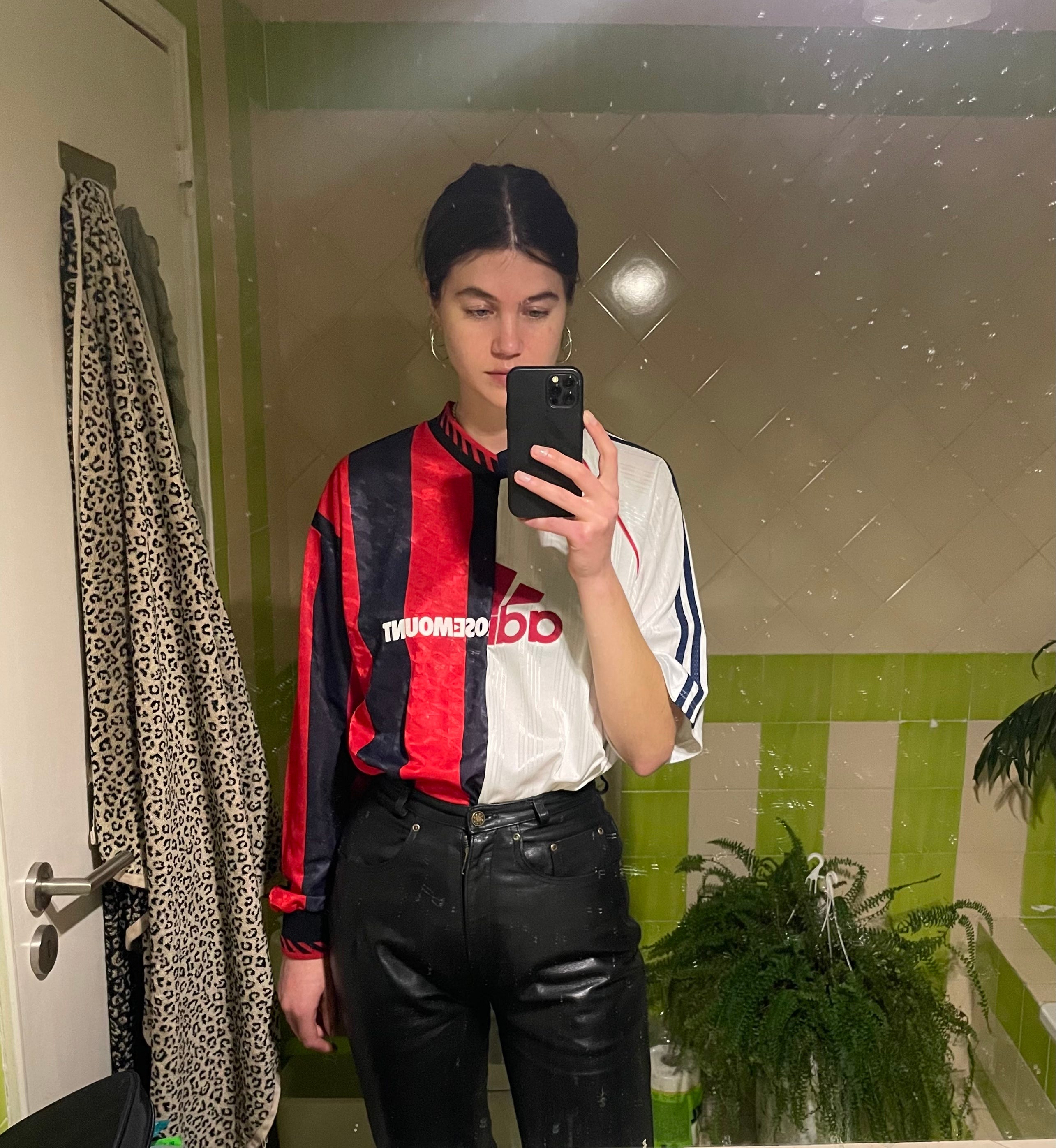
Missing my large London mirror but making do with this fun green bathroom situation (I’m in Lisbon rn). Wearing upcycled football shirt(s) from Depop seller Kitten and vintage leather pants.
Loose Threads
Directed a really cute campaign for Filipino-Australian brand Shy Talaga.
A great interview with Jia Tolentino.
Start your own Thread
Add your thoughts in the comments, and let me know which Threads of Conversation you want to hear about next!